
Getting it right matters. Machine a rotor that should have been replaced and you’re looking at a comeback inside six months. Replace a rotor that had plenty of life left and you’ve cost the customer money they didn’t need to spend. Neither outcome builds trust, and both cost the workshop in the long run.
The decision comes down to measurement, not guesswork. Here’s how to make the call.
Which rotors are still worth machining?
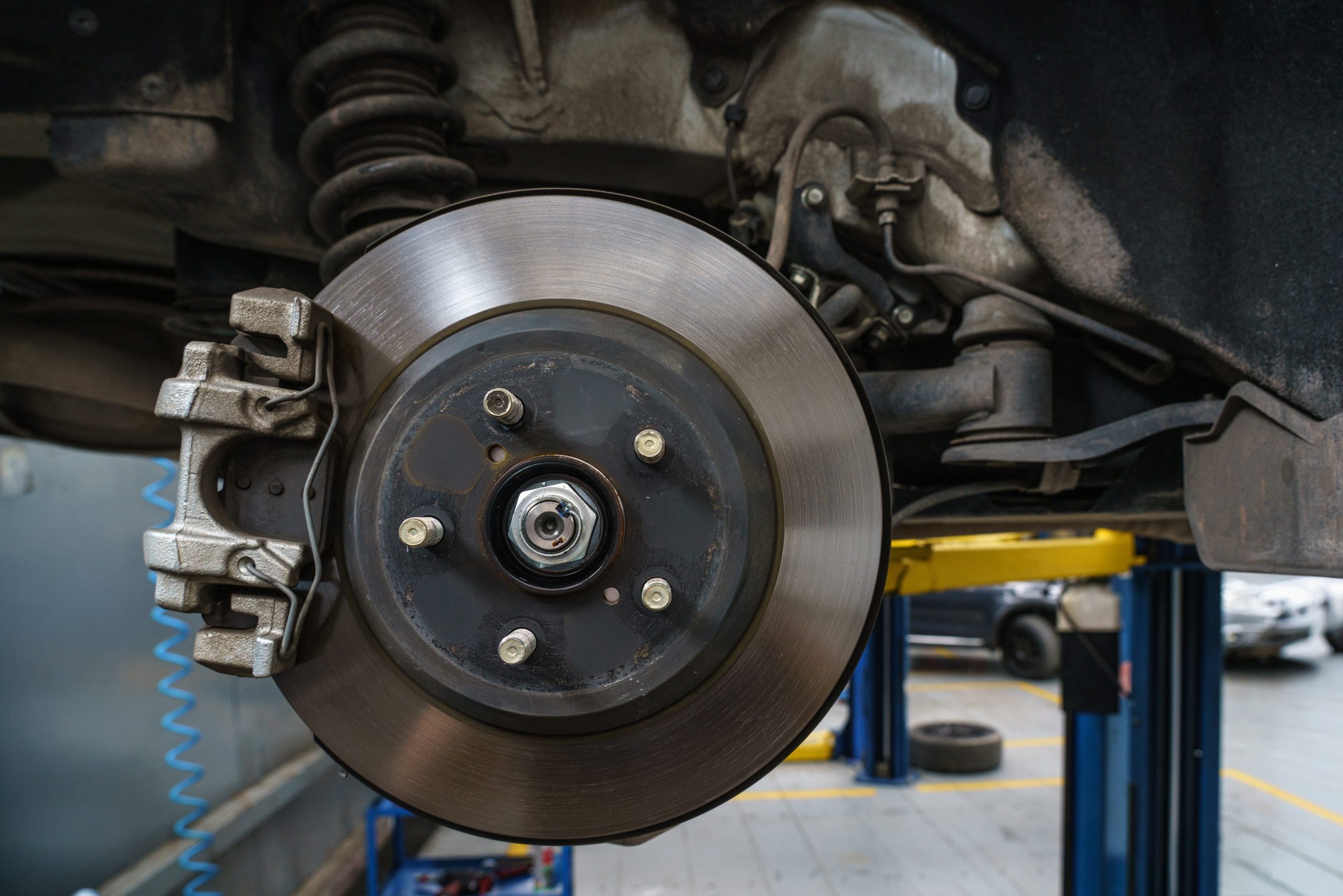
Machining works when the rotor has enough material to lose some and still function safely for the full life of the next set of pads.
Where machining makes the most sense:
- Japanese utes and 4x4s – HiLux, Ranger, BT-50, Triton. These platforms typically ship with thicker rotors designed for heavy-duty use. There’s usually enough meat between the factory thickness and the minimum spec to allow at least one good machining.
- Older Australian and Japanese passenger vehicles – Commodores, Falcons, Camrys, Accords. Rotor designs from this era tend to have generous thickness margins.
- Heavy commercial and trailer applications – thicker rotors, longer service intervals, and machining is often more practical than sourcing replacement parts for less common platforms.
- What machining actually restores: A proper machine job removes minor scoring, glazing, and surface heat spots. It resets the surface profile to give the new pad a clean, flat mating surface for proper bedding. It also corrects minor disc thickness variation (DTV) that causes pedal pulsation, which is often misdiagnosed as warping.
That last point is worth emphasising. Most rotors that get called “warped” are not bent. They have uneven pad material transfer or DTV from lateral runout. Machining corrects DTV. It does not correct the hub or bearing condition that caused it, so if runout is coming from behind the rotor, machining will only provide a temporary fix.
When is replacement the only option?
Australian Standard AS3617-1997 is clear on this. Section 4.3(b)(iii) states that if a brake disc measures at or below the vehicle manufacturer’s specified minimum thickness after brake machining, it must be replaced. That’s not a guideline. It’s the standard.
Replace the rotor when:
Machine or replace? Quick reference
The table below summarises the decision. For the detail behind each call, refer to the sections above.
| Rotor condition | Machine | Replace |
|---|---|---|
| Light scoring, above minimum thickness with margin to spare | ✔ Good candidate | Not necessary |
| DTV causing pedal pulsation, adequate thickness remaining | ✔ Corrects the variation | Not necessary unless hub runout is the root cause |
| Surface glazing or heat spots, no cracking | ✔ Restores pad bedding surface | Not necessary |
| Within 1 mm of minimum thickness before machining | ✘ Not enough material | ✔ Replace now |
| Modern European rotor with tight factory margins | ✘ Designed to be replaced with pads | ✔ Replace with pads |
| Deep scoring from metal-on-metal contact | ✘ Too much material removal required | ✔ Replace |
| Heat cracking (not surface crazing) | ✘ Structural weakness remains after cut | ✔ Replace |
How do you measure properly?
The measurement process is where shortcuts create problems. A quick eyeball or a single reading is not enough to make a responsible machining decision.
What does a good machine job look like?
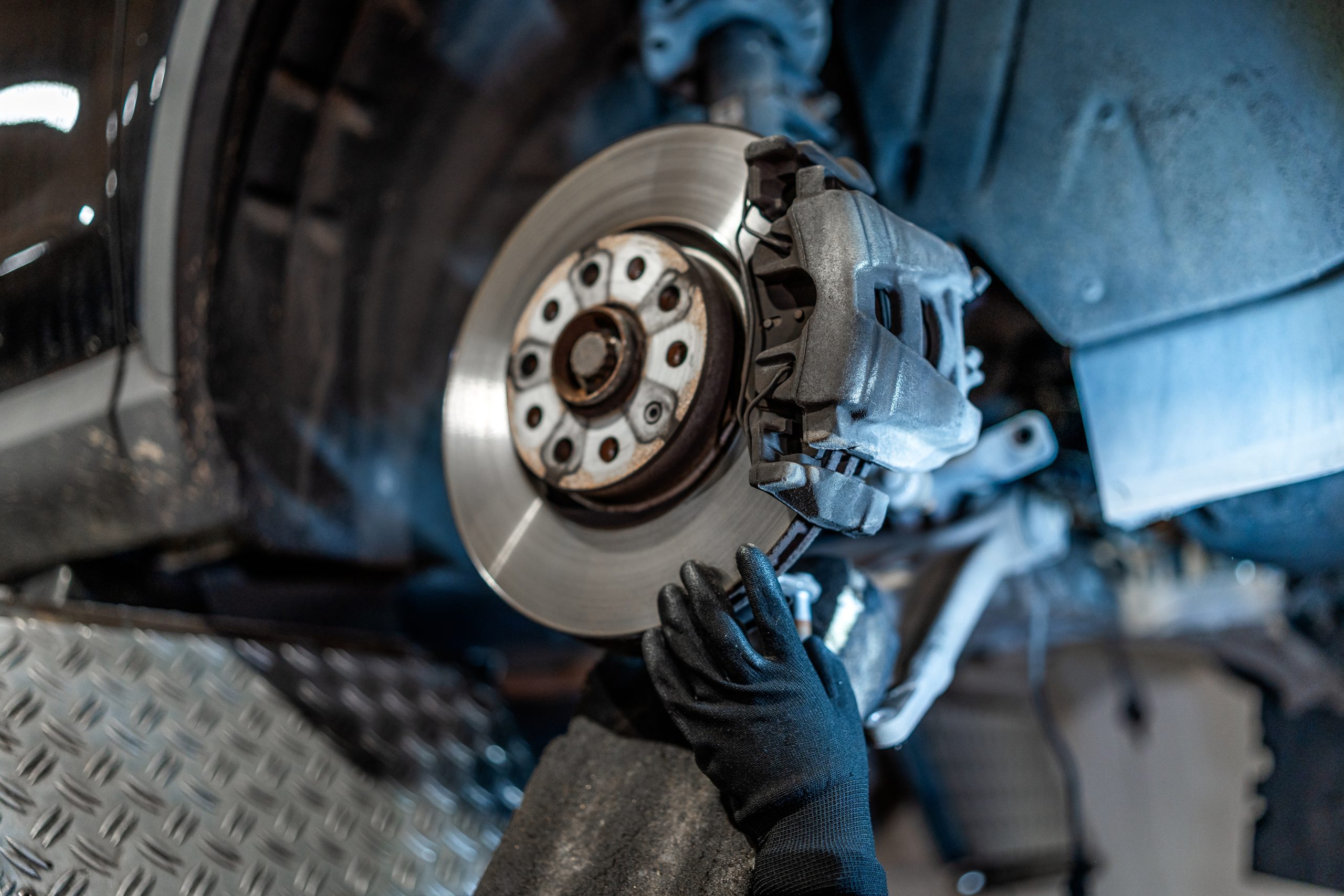
A properly machined rotor has a consistent, non-directional (or fine directional) surface finish that promotes even pad transfer and quiet operation. The target surface finish for most passenger and light commercial rotors sits between 0.8 and 1.6 µm Ra (roughness average).
Signs of a poor machine job:
- Glazed or polished finish. This happens when the cutting tool is dull or feed rate is too slow. The surface looks smooth but won’t allow proper pad bedding. New pads on a glazed surface lead to noise, poor initial bite, and extended bed-in periods.
- Spiral scoring from the lathe. Deep, visible spiral patterns indicate excessive feed rate or worn lathe bearings. The rotor will transfer those patterns into uneven pad wear.
- Inconsistent finish across the face. If one area looks different from another, the lathe wasn’t set up properly or the rotor wasn’t mounted true.
A poor machine job is genuinely worse than no machining. A rotor with even, moderate scoring will bed pads more predictably than one with a glazed or inconsistent surface from a bad lathe setup.
How does the cost stack up?
From a workshop’s perspective, the machining vs replacement decision has three cost layers.
| Cost factor | Machining | Replacement |
|---|---|---|
| Parts/service cost per rotor | $25–$50 at a brake specialist | $40–$150+ depending on vehicle and brand (European and performance rotors significantly higher) |
| Additional labour | Nil if done during pad change | Minimal – rotor is already off the car during a brake service |
| Comeback risk | Higher if machined close to minimum thickness (pulsation or noise within months = repeat strip-down + replacement rotors + lost customer confidence) | Low – new rotor starts at full thickness with the full life of the next pad set ahead of it |
Frequently asked questions
Measure the rotor’s current thickness with a micrometer at four or more points. Compare the thinnest reading against the minimum thickness stamped on the rotor. If there’s enough material above the minimum spec to allow for both the machining cut and the wear from the next pad set, machining is viable. If the margin is tight, replacement is the safer call.
Yes. Australian Standard AS3617-1997, section 4.3(b)(iii), requires that any brake disc measuring at or below the manufacturer’s minimum thickness after machining must be replaced. The minimum thickness is set by the vehicle manufacturer during initial design and is specific to each rotor application.
Some modern rotors, particularly European applications, are manufactured with minimal thickness margins and are intended to be replaced rather than machined. The manufacturer’s position is that machining removes material the rotor can’t afford to lose. This is increasingly common on vehicles where the rotor is engineered as a matched set with the pad compound and caliper design.
It depends on the machining equipment. Standard brake lathes can machine slotted rotors without issue. Drilled rotors require equipment that can handle the interrupted cut without chatter. Not all workshops have lathes set up for this. It’s worth confirming before dropping rotors off.
If the vibration is caused by disc thickness variation, machining corrects it by restoring a uniform thickness across the full rotation. If the vibration is caused by hub runout, bearing play, or caliper issues, machining the rotor provides a temporary improvement at best. The root cause needs to be addressed separately.